Winwon Chips Winwon Chips

How to Effectively Negotiate Bulk Orders for Electronic Components?

Time:2026-06-16 Author:Liam
0%

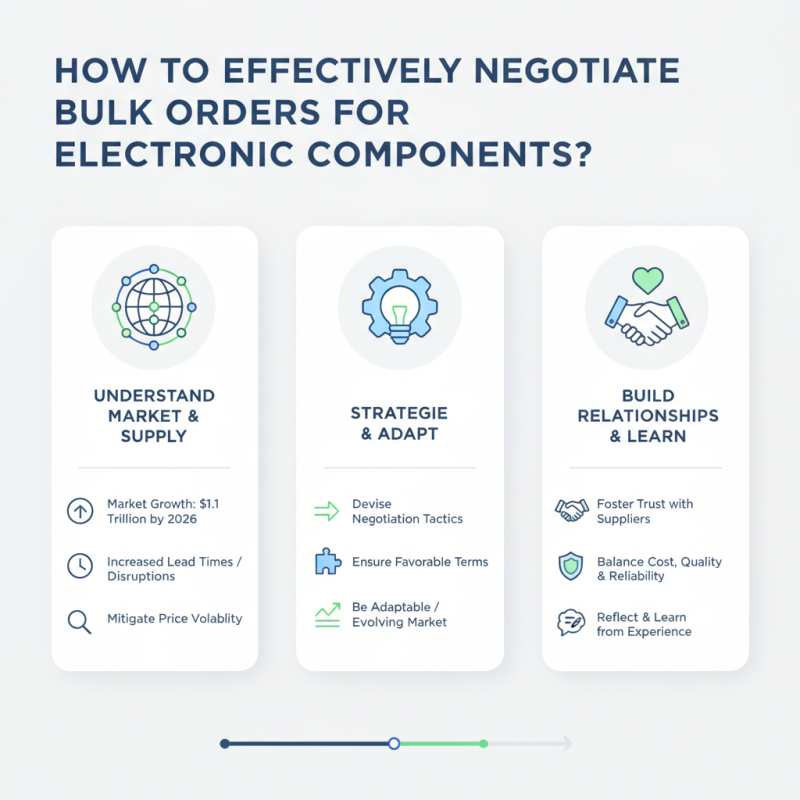
In the fast-paced world of electronics, negotiating bulk orders for electronic components is crucial. The electronic components market is projected to grow to USD 1.1 trillion by 2026, according to a report by MarketsandMarkets. Companies face increasing pressure to manage costs while meeting demand. Effective negotiation becomes a key strategy to maintain competitive pricing.

Understanding market trends and supply chain dynamics is essential. For instance, lead times for components have increased significantly due to recent disruptions. This unpredictability can lead to inflated prices if not addressed properly. Companies must devise strategies on how to negotiate bulk orders for electronic components effectively, ensuring favorable terms and reliable supply.

Experience plays a significant role in negotiations. Companies must build relationships with suppliers to foster trust. Relying solely on price can overlook quality and delivery reliability. Every negotiation should be a learning experience, with reflections on what strategies worked or failed. Being adaptable is vital in this ever-evolving marketplace.
How to Effectively Negotiate Bulk Orders for Electronic Components?

Understanding the Importance of Bulk Orders in Electronics Procurement

Bulk orders play a crucial role in electronics procurement. They significantly reduce per-unit costs, making them an attractive option for businesses. When purchasing in bulk, companies often negotiate better payment terms and delivery schedules. This can lead to improved cash flow, which is vital for any organization. Bulk buying also provides a buffer against supply chain disruptions. Having a stockpile of components ensures that production continues smoothly, even during shortages.

However, understanding the implications of bulk orders requires careful consideration. Larger orders can tie up capital, impacting liquidity. Businesses must analyze their inventory needs accurately to avoid overstocking. They also need to assess supplier reliability. An unreliable supplier can jeopardize production schedules, leading to lost revenue. It's essential to build strong relationships with suppliers. This fosters trust and can lead to more favorable terms in contracts.

Moreover, the importance of bulk orders extends beyond cost savings. It also allows companies to control their supply chain better. A well-managed inventory reduces dependency on fluctuating market prices and minimizes risks. Reflecting on these aspects can provide deeper insights into making informed procurement decisions. Understanding these dynamics can ultimately lead to more strategic choices in bulk ordering approaches.

Identifying the Right Suppliers for Electronic Components Bulk Orders

Identifying the right suppliers for bulk orders of electronic components is crucial for successful negotiations. A recent report from the Global Industry Analysts stated that the electronic component market is expected to reach $1 trillion by 2025. With this growth, the competition among suppliers will intensify. Selecting suppliers that align with your business needs is essential yet challenging.

Consider their reliability and reputation. Look for suppliers with proven track records in your specific sector. A lack of quality parts may lead to delays in your projects. Approximately 30% of companies reported facing issues with component failures due to poor supplier selection. This statistic underlines the importance of due diligence.

Strong partnerships can enhance bargaining power. Understand the supplier's production capacity and delivery timelines. A well-structured relationship can lead to better pricing and terms. However, be aware that reliance on a single supplier might backfire. Diversifying your supplier base could mitigate risks. Balancing quality, reliability, and cost is key to navigating this complex market landscape.

Preparing for Negotiation: Research and Data Gathering Techniques

When negotiating bulk orders for electronic components, solid preparation is crucial. Effective research can provide leverage when engaging suppliers. A report by the IPC (Association Connecting Electronics Industries) indicates that effective data gathering increases negotiation success rates by 40%. Understanding market trends, pricing structures, and vendor capabilities will strengthen your position.

Collect industry data from reputable sources. Websites like Statista offer insights into pricing trends and demand projections. Exploring recent market analyses can uncover patterns that might not be widely recognized. Analyze competitors and their purchasing strategies; this information can offer useful benchmarks for negotiations.

Tip: Always have a backup supplier in mind. This gives you negotiation leverage.

Utilize tools for tracking past purchases and market prices. Keeping detailed records facilitates informed decisions. Consider the total cost of ownership, including shipping and handling. A thorough understanding of these costs can help you negotiate better terms. Recognize that not all suppliers offer transparency; openness can vary significantly.

Tip: Prepare to ask questions during discussions. This shows you are informed and engaged.

Effective Communication Strategies During Negotiations

Effective communication is crucial when negotiating bulk orders for electronic components. Clear dialogue can lead to better prices and favorable terms. According to a report by Statista, the global electronic components market was valued at approximately $400 billion in 2021 and is expected to grow by over 5% annually. This growth indicates increased competition among suppliers, making effective communication even more essential.

Building rapport with suppliers is a vital strategy. Understand their concerns and priorities. Empathy during negotiations fosters trust. It’s important to listen actively. A study by the Institute for Supply Management shows that about 70% of negotiators believe listening is critical for success. However, many professionals often overlook this, leading to missed opportunities. Using concise and persuasive language strengthens your position.

Additionally, transparency can greatly enhance relationships. Be upfront about your needs and constraints. Studies show that businesses that prioritize honest communication build stronger partnerships, reducing the risk of misunderstandings. However, some negotiators find it challenging to balance transparency with competitiveness. Reflecting on how to share information effectively can improve negotiation outcomes. Effective communication sets the stage for successful bulk order negotiations in the electronic components sector.

How to Effectively Negotiate Bulk Orders for Electronic Components? - Effective Communication Strategies During Negotiations

Negotiation Aspect Key Strategies Expected Outcomes Challenges
Price Determination Research market prices, compare quotes Achieve competitive pricing Vendor reluctance to reduce prices
Volume Discounts Discuss tiered pricing based on quantity Lower unit prices with higher quantities Negotiating minimum order quantities
Delivery Terms Define lead times and shipping options Reliable and timely delivery schedule Potential delays and supplier issues
Payment Terms Negotiate payment upon receipt or in installments Improved cash flow management Vendors preferring upfront payments
Communication Style Use clear, concise language and active listening Build rapport and mutual understanding Cultural differences in communication

Finalizing Terms: Contractual Considerations and Best Practices

When finalizing terms in bulk order negotiations, clarity is paramount. Establishing clear definitions for each component, including specifications and quality standards, helps mitigate misunderstandings. Both parties should agree on quantity, delivery schedules, and payment terms before signing any contract. It is important to involve legal professionals to review these terms, ensuring they meet industry standards and legal requirements.

Another critical factor is communication. Regular discussions with the supplier can identify potential issues early on. If something feels off, address it promptly. Keep an open line of dialogue. Establishing trust can lead to better terms and possible discounts down the line. Consider the supplier's needs as well. A mutually beneficial agreement fosters long-term relationships. It’s essential to reflect on the negotiation style used; sometimes, a more collaborative approach yields better outcomes than a purely competitive one.

Bulk Order Negotiation Trends for Electronic Components

FAQS

: What are the benefits of bulk orders in electronics procurement?

: Bulk orders reduce per-unit costs and improve cash flow. They also help mitigate supply chain disruptions.

How can bulk orders impact a company's capital?

Larger bulk orders can tie up capital, which may affect liquidity and inventory management if not analyzed properly.

Why is supplier reliability important when placing bulk orders?

An unreliable supplier can disrupt production schedules and lead to potential revenue losses for a business.

What should businesses consider when selecting suppliers?

Companies should assess the supplier’s reputation, production capacity, and delivery timelines. These factors are crucial for effective negotiations.

How can effective communication aid in negotiations?

Clear dialogue helps achieve better prices and terms. Building rapport and listening actively also fosters trust between parties.

Why might relying on a single supplier be risky?

Dependence on one supplier can backfire. Diversifying suppliers can reduce risks and enhance overall supply chain stability.

Conclusion

Negotiating bulk orders for electronic components effectively is crucial for optimizing procurement costs and ensuring the timely availability of materials. Understanding the significance of bulk orders allows buyers to leverage better pricing and terms. The process begins with identifying reliable suppliers who can meet specific requirements efficiently.

In preparation for negotiations, thorough research and data gathering are essential to inform decision-making. Employing effective communication strategies during discussions can foster a constructive dialogue, leading to favorable outcomes. Finally, finalizing the terms involves a careful review of contractual considerations and best practices to safeguard interests, ensuring a mutually beneficial agreement.

Liam

Liam

Liam is a dedicated marketing professional with a profound expertise in the industry, where he excels at highlighting the unique advantages of our core products. With a keen understanding of market trends and consumer needs, Liam frequently updates our company’s professional blog, providing......